

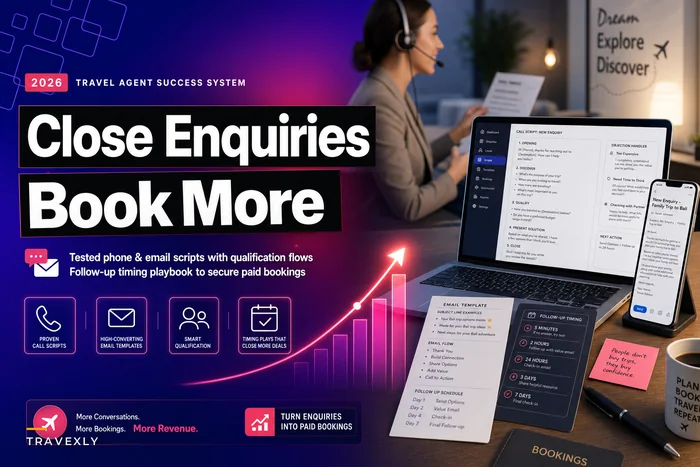
Scripts that turn enquiries into paid bookings: phone and email templates for travel agents
Short, tested scripts for common travel objections, a qualification flow to reduce back-and-forth, and a timing playbook for follow-ups.

Actionable travel agency strategies, booking optimization tips, client retention methods, itinerary customization, AI-driven insights, and growth tactics for modern travel professionals.
Short, tested scripts for common travel objections, a qualification flow to reduce back-and-forth, and a timing playbook for follow-ups.

A practical, non‑technical playbook that helps small travel agencies pick and implement one of three lightweight automation stacks: (A) Zapier + Google Sheets, (B) Make (Integromat) + lightweight DB (Sheets / Airtable / hosted Postgres), and (C) a native travel SaaS with built‑in automations. For each stack the brief requires: a one‑line “Who this is best for”, explicit Trigger→Actions→Data writes→Error handling sequences for 3 core workflows (booking confirmation, payment milestone reminders, supplier invoice pulls), a sample datastore schema, worked cost examples at 50/200/1,000 bookings/month, email/filter templates, an operations checklist (monitoring, retry/DLQ, audits), migration criteria (Sheets→Airtable→SQL), OCR/data‑quality guidance (confidence thresholds, typical error rates), accounting integration mapping (QuickBooks/Xero), common failure modes with remediation steps, and links to vendor docs on rate limits and security so ops teams can finalize choices without guesswork.
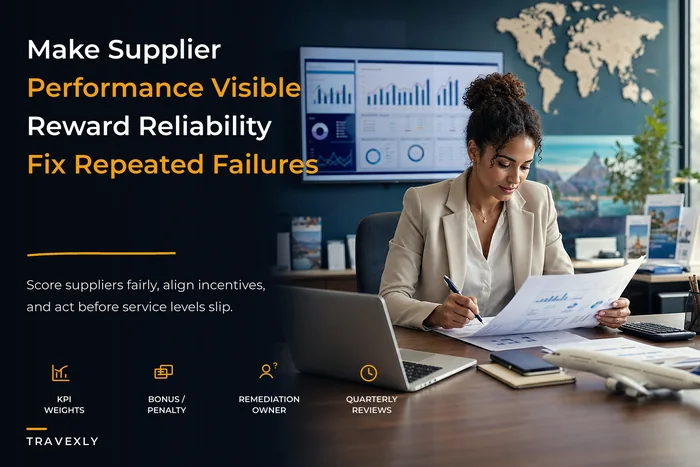
Supplier scorecards, KPI selection, incentive/penalty constructs, remediation processes and quarterly review agendas tied to operational metrics to improve supplier performance.
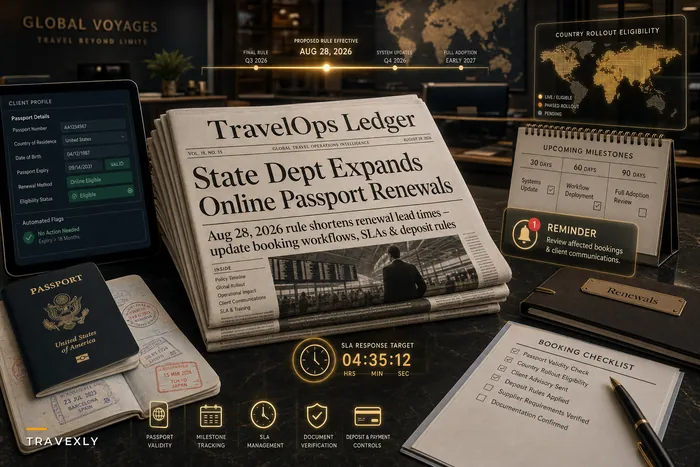
Explain the proposed rule (Aug 28, 2026) and timeline, then provide a focused, actionable checklist: (1) update CRM/passport-validity fields and automated flags; (2) rework deposit and payment milestone templates for reduced renewal lead times; (3) refresh client advisory copy and automated reminder cadences; (4) change staff SLAs, escalation matrices and training for document verification; (5) monitor country rollout and adapt operations by market; (6) productize last‑minute international offers while protecting margins; (7) audit supplier contract language for documentation requirements; (8) run a 30/60/90 rollout plan to deploy changes.
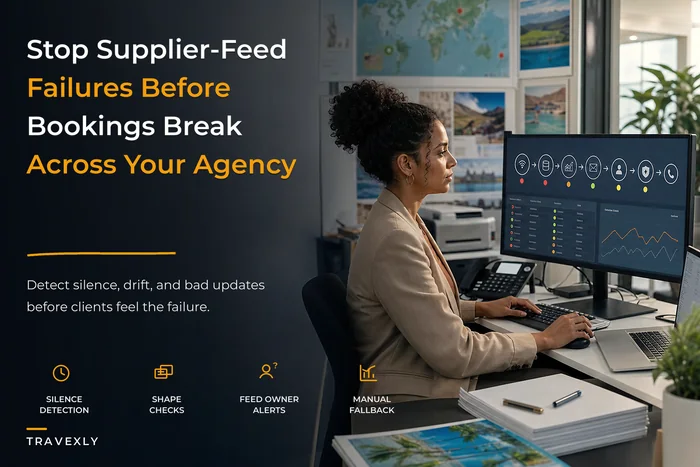
Company-level integration architecture focusing on event vs batch patterns, vendor ownership model, monitoring/alerting playbook, runbooks for common feed failures and operational guardrails non-developers can run.

Treat supplier relationships as a repeatable commercial lifecycle with contractual operational clauses, supplier scorecards, audit cadence, settlement governance and quarterly review agendas to protect margins.

Actionable operational rules for deposit sequencing, reserve policies, payment routing (agent vs principal), supplier-credit playbooks, FX handling and short-term financing with worked examples and modelling templates.

Travel-specific canonical data model plus practical sync policies (conflict resolution, frequency rules), owner matrix, sample field maps for bookings/customers/suppliers and runnable reconciliation smoke-tests that stop duplicate records and booking mismatches.

Company-level commercial playbook with reusable contract clause patterns, commission audit cadence, dispute SOPs, supplier risk-rating and enforcement matrix plus sample clause language and worked audit examples to control liability and margins.