

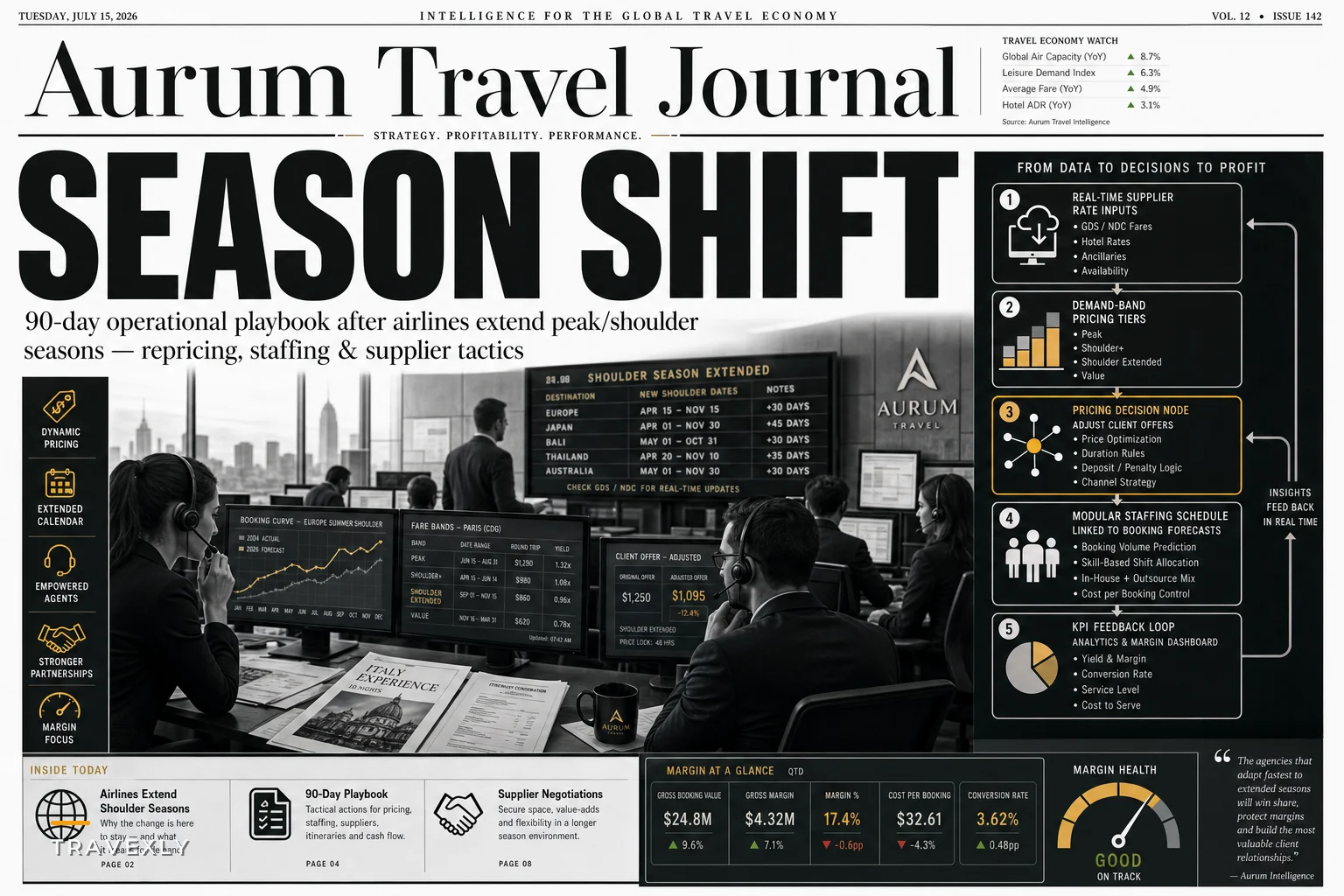

Airlines and hotels are throwing out the old playbook. What CNBC reported last week about carriers extending peak schedules deep into traditional shoulder months isn't just a temporary adjustment—it's becoming the new operational reality. United adding flights to European destinations through November, Delta maintaining full Caribbean capacity into October, hotels keeping summer pricing through what used to be quiet September weeks.
For travel agencies, this fundamentally breaks how you've been running shoulder season operations. The comfortable rhythm of scaling down staff in September, negotiating better supplier rates for October groups, having breathing room to catch up on admin—that's gone.
The Operational Squeeze Nobody Prepared For
Most agencies built their entire operational model around predictable seasonal patterns. High season meant all hands on deck, premium pricing power, limited inventory. Shoulder season meant smaller teams could handle moderate demand while you rebuilt cash reserves at decent margins. Off-season was for planning, training, and locking in next year's contracts.
Now you're dealing with July-level demand in October but without July pricing power. Hotels know they can fill rooms, so those shoulder season rates you used to get are creeping toward peak pricing. Airlines are running full schedules but commission structures haven't adjusted. Clients expect peak season service levels year-round because that's what they're seeing from suppliers.
The math stops working fast. Your cost base stays elevated—can't cut staff when bookings keep flowing—but margins compress because you're stuck between supplier pricing that assumes strong demand and client expectations anchored to traditional shoulder season deals.
A boutique agency I worked with recently discovered they were actually losing money on September European packages. Same operational costs as August, supplier rates only 15% lower than peak instead of the usual 30-35%, but they'd already marketed "shoulder season savings" to their client base. They had to eat the difference or risk their reputation.
Why Traditional Shoulder Season Playbooks Create Chaos
The problem runs deeper than pricing mismatches. Agencies typically use shoulder seasons to rotate staff vacations, run system updates, onboard new team members, and negotiate next year's supplier agreements. When shoulder season disappears, these tasks either don't happen or they get crammed into peak demand periods.
Eliminate booking chaos and streamline operations.
Travexly helps you manage, confirm, and track travel bookings effortlessly.
- Unified booking management
- Automated client communications
- Team scheduling & itinerary tracking
No credit card required
Staffing alone gets complicated fast. You can't maintain a full summer team through November—the economics don't work. But you also can't drop to skeleton crews when bookings stay strong. The agencies getting crushed right now are toggling between "peak" and "off-peak" modes week by week, burning out core staff while constantly training temps who never quite learn your systems.
Then there's inventory. Shoulder season used to mean easier access to premium properties at reasonable rates. Now you're competing for the same inventory year-round without the booking leverage that comes with true peak volumes. Suppliers know you need them more than they need you when everyone's fighting for October availability.
Commission structures make even less sense. Many agencies have different splits for peak versus shoulder bookings, assuming lower margins justify lower payouts. But if your agents are doing peak-level work for shoulder-level commissions, they'll figure that out. One agency owner told me she lost two top performers who realized they were essentially working harder for less money as seasons blurred together.
Building Dynamic Operations That Flex With Demand
The agencies adapting aren't trying to force-fit old seasonal models onto new demand patterns. They're rebuilding operations to handle variable demand without assuming traditional seasonal breaks exist.
Start with pricing architecture. Instead of peak/shoulder/off tiers, successful agencies now run pricing based on actual supplier costs and availability. One agency created what they call "demand bands"—five pricing tiers that adjust based on real-time supplier rates, not calendar dates. Their September pricing might hit band 4 one week and band 2 the next, depending on actual market conditions.
This requires different client communication. You can't promise "shoulder season deals" when shoulder season doesn't meaningfully exist. Agencies thriving right now position themselves around value and experience rather than seasonal discounts—selling "optimal timing for your specific interests" rather than "off-peak savings."
Here's a simple workflow to visualize pricing and staffing adjustments.
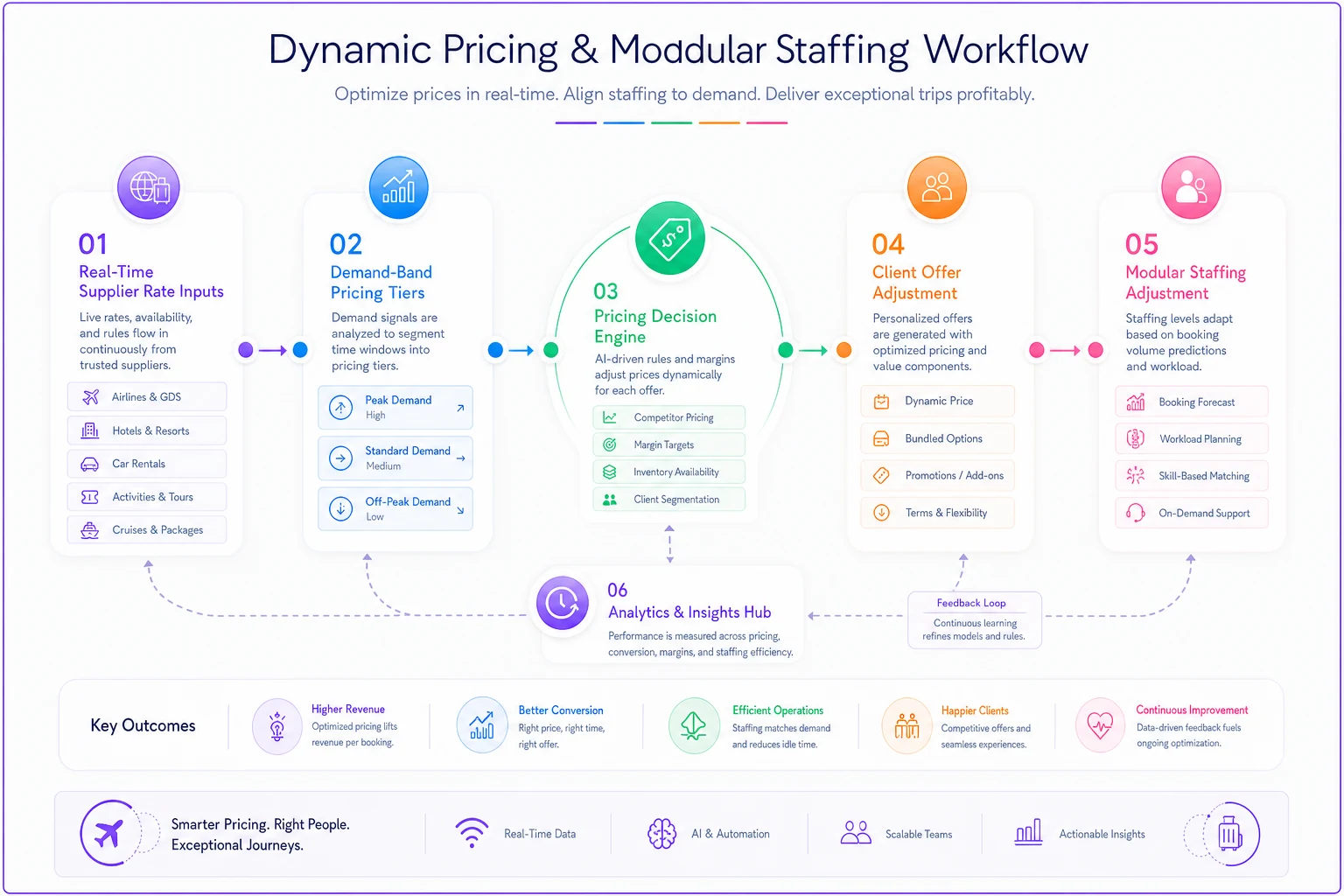
Staffing becomes modular rather than seasonal. Instead of scaling entire teams up and down, smart agencies maintain a stable core year-round and flex specific functions. Maybe you keep client service fully staffed but scale booking support based on weekly volume. Or maintain full booking capacity but flex marketing and administrative support.
The key distinction is identifying which roles directly impact client experience versus which ones support back-office operations. Client-facing roles stay consistent—people want their familiar agent whether booking in July or November. Back-office can flex more aggressively.
Reworking Supplier Relationships for Year-Round Leverage
Traditional supplier contracts assumed seasonal volume patterns. You'd commit to moving certain room nights or seats during peak season in exchange for better shoulder rates. That trade-off breaks when suppliers don't need to discount shoulder inventory.
Agencies finding success are negotiating completely different deal structures. Rather than seasonal commitments, they're securing volume-based pricing across all months. Move 50 room nights per month regardless of season, get consistent tier pricing. More predictable for suppliers, better margin protection for agencies when demand patterns shift.
Some agencies are going further—creating their own seasonal definitions with suppliers. One group negotiated "value periods" with key hotels: specific weeks where they get preferential pricing regardless of overall market demand. Hotels get guaranteed volume during potentially softer periods, agencies get predictable margin opportunities.
Dynamic packaging becomes critical when you can't rely on shoulder season hotel deals. You need other levers to create value. Agencies doing this well bundle experiences, transfers, and extras that maintain margins even when core accommodation costs rise. A client might pay near-peak hotel rates in October, but you hold margin through exclusive tours, premium transfers, and dining experiences where you've negotiated better terms.
Technology and Tracking for Continuous Optimization
Manual tracking can't keep up when seasonality becomes fluid. Agencies still running on spreadsheets and basic CRM systems are drowning in complexity. You need real-time visibility into margin by booking, demand patterns by route, and supplier pricing trends.
The operational challenge isn't just tracking current performance—it's spotting where demand will spike next. NPR's coverage of aviation capacity shows airports hitting record passenger volumes in traditionally quiet periods. Agencies need to catch these patterns early to secure inventory and adjust pricing before they're caught short.
A framework that actually works:
| Metric | Traditional Target | Dynamic Target | Tracking Method |
|---|---|---|---|
| Booking velocity | Seasonal average | 7-day rolling average | Daily count by destination |
| Margin percentage | 22-25% shoulder | Market-adjusted band | Real-time by booking |
| Staff utilization | 60-70% shoulder | 75-85% all periods | Hours logged vs capacity |
| Supplier rate variance | -30% from peak | -5% to -15% variable | Weekly rate pulls |
| Client acquisition cost | Lower in shoulder | Consistent year-round | Marketing spend/new client |
Use automated alerts to lock in inventory when short-term booking velocity spikes.
AI-powered operational software is genuinely useful here because it catches patterns humans miss. When booking velocity for Mediterranean cruises suddenly spikes in what should be shoulder season, automated systems can trigger inventory locks and pricing adjustments before you're caught short. The same platform can shift staff schedules based on predicted demand, ensuring coverage without overstaffing.
Where the automation really proves itself is supplier reconciliation and margin tracking. When rates and availability shift constantly, manual tracking means you won't spot margin erosion until month-end reports. AI-assisted platforms can flag when specific routes or packages drop below minimum margins in real-time, letting you adjust pricing or pause sales before losses compound.
Creating Sustainable Operations Without Seasonal Breaks
The hardest adjustment is psychological. Agency owners and teams are used to seasonal breathing room—time to reset, plan, and recover. When every month runs at 70-80% of peak intensity, burnout becomes a real operational risk.
Smart agencies are creating artificial seasons for internal operations. Even if customer demand stays strong, you can designate specific weeks for planning, training, and process improvements. One agency blocks the third week of each month for internal work—they still handle bookings but no new initiatives launch, no supplier negotiations happen, and teams focus on improving existing processes.
This connects directly to scaling sustainably. In our 12-month roadmap for scaling agencies, we emphasized building operations that can grow without breaking. When shoulder seasons disappear, those foundations become more critical, not less. You can't rely on quiet months to fix problems or implement new systems.
The agencies struggling most kept pushing forward without adapting their operational rhythm. Trying to maintain peak season energy year-round leads to mistakes, staff turnover, and degraded service. The ones thriving have accepted that sustainable operations require intentional downtime, even when customer demand doesn't provide it naturally.
Practical Adjustments to Make This Quarter
Looking at Q3 specifically:
-
First, audit your current shoulder season assumptions. Every pricing model, staffing plan, and supplier contract built around traditional September-November patterns needs review. One agency found roughly 40% of their fall packages were priced using outdated shoulder season templates that would generate negative margins at current supplier rates.
-
Second, renegotiate critical supplier agreements now, before they realize how much leverage they have. If you wait until September to lock in October inventory, you'll pay near-peak rates. Agencies moving fast are securing inventory through November at rates meaningfully below where they'll likely land.
-
Third, restructure team communication and workload distribution. Agencies handling this transition well have daily check-ins to assess capacity and shift resources. When Tuesday suddenly looks like a Monday in terms of booking volume, you need systems to respond quickly without burning out key staff.
Fourth, adjust client expectations proactively. Send communications now about evolving travel patterns and how you're adapting. Position flexibility and value over seasonal discounts. Clients who understand the market dynamics are less likely to push for shoulder season pricing that no longer exists.
Who Should Actually Embrace Extended Seasons
Not every agency benefits from year-round intensity. Boutique agencies focused on complex, high-touch itineraries might actually suffer when they can't use shoulder seasons for detailed planning and relationship building. If your competitive advantage is deep personalization and exclusive experiences, maintaining quality matters more than capturing every possible booking.
Group travel agencies need particular caution. Group operations require extensive pre-planning, coordination, and supplier negotiation. Shoulder seasons provided that planning window. Now you're trying to organize 2025 groups while managing elevated 2024 demand through traditionally quieter months—that's a real operational problem, not just an inconvenience.
The agencies best positioned for extended seasons are those with strong operational platforms and flexible staffing models. If you've already invested in AI-assisted booking systems, automated supplier reconciliation, and modular team structures, you can capture additional revenue without proportionally increasing costs. But if you're still running largely manual operations, extended seasons might break your systems before you can adapt.
Volume-focused agencies with standardized packages often thrive in this environment. When you're selling similar trips repeatedly, extended seasons just mean more profitable bookings. But if every booking requires custom planning and supplier negotiation, year-round intensity might actually reduce profitability rather than grow it.
Shoulder season operations aren't really about seasons anymore—they're about building flexible systems that handle variable demand profitably. Agencies clinging to traditional seasonal models will find themselves either overwhelmed during unexpected busy periods or overstaffed during sudden lulls. The winners are those who build operations that flex with actual demand, not calendar assumptions.
This shift isn't temporary. Climate patterns, remote work flexibility, and evolving traveler preferences mean the old seasonal rhythms won't return. Agencies that restructure now for continuous operations with intentional internal rhythms will capture more revenue while protecting margins. Those waiting for "normal" seasons to return will watch competitors take their clients and suppliers squeeze margins until the math stops working entirely.
The agencies succeeding aren't trying to sustain peak season intensity year-round—that's a recipe for burnout and operational failure. They're building operations that can handle 70-80% intensity continuously while protecting margins and keeping teams functional. That requires different systems, different supplier relationships, and different expectations about what running a modern travel agency actually looks like.
Ready to elevate your travel agency workflow?
Join 1,200+ travel agencies using Travexly to save time, improve client satisfaction, and boost operational efficiency.